



How to measure customer experience: A Complete Guide
To really get a grip on customer experience, you need to track a blend of metrics that tell you the full story satisfaction, loyalty, and how much effort your customers are putting in. Key indicators like Net Promoter Score℠ (NPS®) are great for seeing long-term loyalty, while Customer Satisfaction (CSAT) gives you instant feedback on specific moments. Flying blind without this data isn't just a risk; it's a surefire way to lose customers and miss out on growth.
Why You Need to Measure Customer Experience
Ignoring the quality of your customer experience isn't just a missed opportunity it's a direct threat to your business. In a market flooded with choices, the way customers feel about your brand is what sets you apart. It's simple: if you don't measure CX, you can't improve it. And what you don't improve will almost certainly get worse.

This isn't just some abstract business theory. The data shows a pretty worrying trend: customer experience is actually getting worse across the board. According to Forrester's 2025 Global Customer Experience Index, a staggering 25% of U.S. brands saw their CX rankings drop for the second year in a row. Meanwhile, only 7% showed any kind of improvement.
This slump isn't just about one thing; it's across effectiveness, ease, and emotion. Customers are finding it harder to get value from businesses. You can dive into the full report on the state of global CX from Forrester.
The Real Costs of Ignoring CX
When you don't bother to measure customer experience, you're opening the door to some serious financial pain. Customers who have a bad time don't just get annoyed they walk away. Research shows that 73% of consumers will jump to a competitor after a few bad experiences, and more than half are gone after just one.
This churn leads to some pretty clear costs, both direct and indirect:
-
Skyrocketing Customer Churn: Losing customers is expensive. It costs way more to bring in someone new than to keep an existing customer happy.
-
A Damaged Reputation: Unhappy customers talk. They post reviews, tell their friends, and scare away potential new business.
-
Lower Customer Lifetime Value (CLV): Happy customers stick around and spend more. A single poor experience can tank the total revenue you'll ever see from that person.
-
Bloated Operational Costs: When you have friction points and unresolved issues, your support team gets buried. This drives up service costs without actually making anyone happier.
Measuring CX is your early warning system. It lets you spot the friction points and fix them before they turn into a massive churn problem and a wave of negative reviews.
How to Turn Measurement into a Competitive Edge
Look, the goal isn't just to collect numbers and make pretty charts. The real magic happens when you use customer experience analytics to make smart decisions that actually improve the customer journey.
By consistently tracking your metrics, you can pinpoint exactly where things are going sideways. Is it a confusing checkout page? Slow support replies? A clunky onboarding process? The data will tell you.
Even small, measured fixes can have a huge impact. Solving one common headache can slash your churn rate and send retention soaring. This data-driven approach turns CX from a fluffy concept into a core business driver that fuels revenue and builds long-term stability.
Define Your Customer Experience Goals
Before you even think about which CX metric to track, you have to know why you're tracking it. It's so easy to fall into the trap of collecting data just for the sake of it. This usually ends with a cluttered dashboard full of vanity metrics and no real action.
Defining your objectives is the essential first step. It gives your entire measurement program a purpose and a clear destination.
The key is to ditch vague goals like "making customers happier." A powerful CX goal is specific, measurable, and hooks directly into a real business outcome. Ask yourself what you're actually trying to accomplish. Are you fighting customer churn? Trying to boost product adoption? Maybe you just need to ease the burden on your support team. Each of these requires a completely different way of measuring success.
Connecting CX Goals to Business Outcomes
To get buy-in from leadership and prove the value of your work, you have to connect your CX goals to the company's bottom line. This is non-negotiable. Start by asking, "If we make the customer's experience better right here, what business metric will move?"
Here’s what that looks like in the real world:
-
Business Goal: Cut customer churn by 15% this quarter.
-
CX Goal: Nail the onboarding experience. We need to make sure new users hit their "aha!" moment within their first two sessions. This is where they either see the value and stick around, or get confused and leave.
-
How You'll Measure: We'll track Customer Effort Score (CES) right after the onboarding tutorial and keep a close eye on early-stage feature adoption rates.
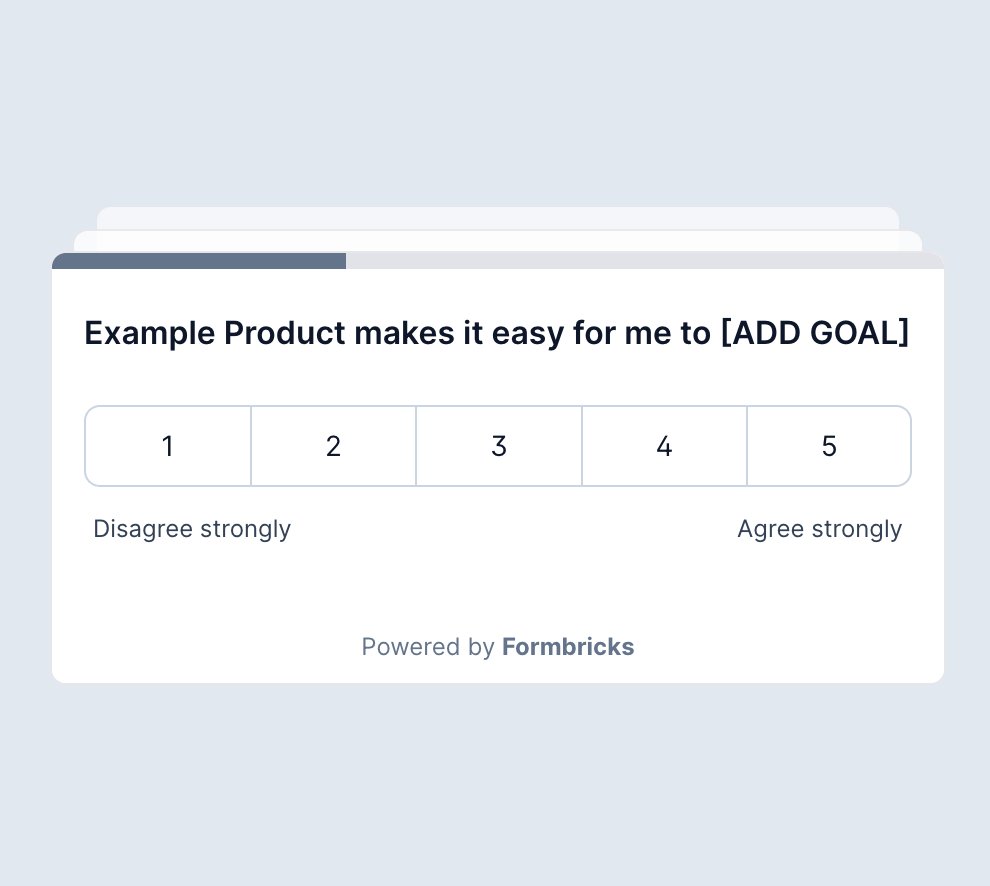
See how that works? We just turned a high-level business target into a concrete, actionable CX objective. Now the team knows exactly where to focus their energy and has a direct way to see if their efforts are actually reducing churn.
Your goal isn't just to get a good score on a survey. It's to influence customer behavior in a way that drives growth, loyalty, and efficiency for the business. A high NPS is nice, but a high NPS that correlates with a lower churn rate is powerful.
Tailoring Goals to Your Business Model
A one-size-fits-all approach to CX goals is a recipe for irrelevant data. What matters to a SaaS user is worlds away from what an e-commerce shopper cares about. You have to tailor your goals to your specific business model and customer journey.
Let's break it down with a couple of different scenarios.
Case 1: A SaaS Company
A B2B software company lives and dies by user engagement and retention. Their biggest fear is a new customer signing up, getting overwhelmed, and churning out before they ever truly get started.
-
Primary Business Concern: Improving trial-to-paid conversion rates and locking in long-term users.
-
Specific CX Goal: Slash the time it takes for a new user to complete a key setup task from an average of 25 minutes down to under 10 minutes.
-
Measurement Focus: They’d lean heavily on measuring CES at critical onboarding milestones and tracking feature usage to confirm users are engaging with the product's core value proposition.
Case 2: An E-commerce Brand
For an online store, the checkout process is just the beginning. The real magic the stuff that builds loyalty and gets people coming back happens after the purchase.
-
Primary Business Concern: Increasing customer lifetime value (CLV) and driving repeat purchases.
-
Specific CX Goal: Boost post-purchase satisfaction by resolving 95% of delivery issues within 24 hours.
-
Measurement Focus: They would send CSAT surveys the moment a support ticket is closed and track the repeat purchase rates of customers who've had an issue resolved.
By putting in the work to define these focused goals first, you guarantee that every survey you send and every data point you collect is relevant, actionable, and tied directly to what moves the needle for your business.
Choosing the Right Customer Experience Metrics
Once you know why you're measuring customer experience, the next step is picking the right tools for the job. This isn't about grabbing the most popular acronyms off the shelf. It's about choosing the specific metrics that will actually answer your most important business questions. Each one NPS, CSAT, CES tells a different part of your customer's story, from their satisfaction in a single moment to their long-term loyalty to your brand.
This decision tree can help you quickly match your business model to the metrics that are most likely to give you clear, actionable insights.
As you can see, some metrics are universally helpful, but others are tailored for specific customer journeys. Getting this right from the start saves a lot of wasted effort down the road.
Comparing Key Customer Experience Metrics
To help you get your bearings, let's break down the most common CX metrics. This table gives you a quick overview of what each one measures, the kind of question it asks, and where it fits best in your strategy.
| Metric | What It Measures | Typical Question | Best Use Case |
|---|---|---|---|
| NPS | Overall brand loyalty and the likelihood of word-of-mouth growth. | "How likely are you to recommend [Company] to a friend or colleague?" | Tracking long-term customer relationships and predicting future growth. |
| CSAT | In-the-moment satisfaction with a specific interaction or product. | "How satisfied were you with your recent [interaction/purchase]?" | Getting immediate feedback on specific touchpoints like a support call or a new feature. |
| CES | The amount of effort a customer had to exert to get something done. | "How easy was it to get your issue resolved?" | Identifying and eliminating friction in processes like customer support or onboarding. |
| FCR | The efficiency of your support team in resolving issues on the first attempt. | An internal metric, calculated as (Resolved on First Contact / Total Cases). | Measuring the effectiveness and efficiency of your customer service operations. |
| Churn Rate | The percentage of customers who stop using your service over a period. | An internal metric, calculated as (Customers Lost / Total Customers) x 100. | The ultimate indicator of customer dissatisfaction and overall business health. |
This isn't about picking just one. The real power comes from combining them to see the full picture of your customer's journey.
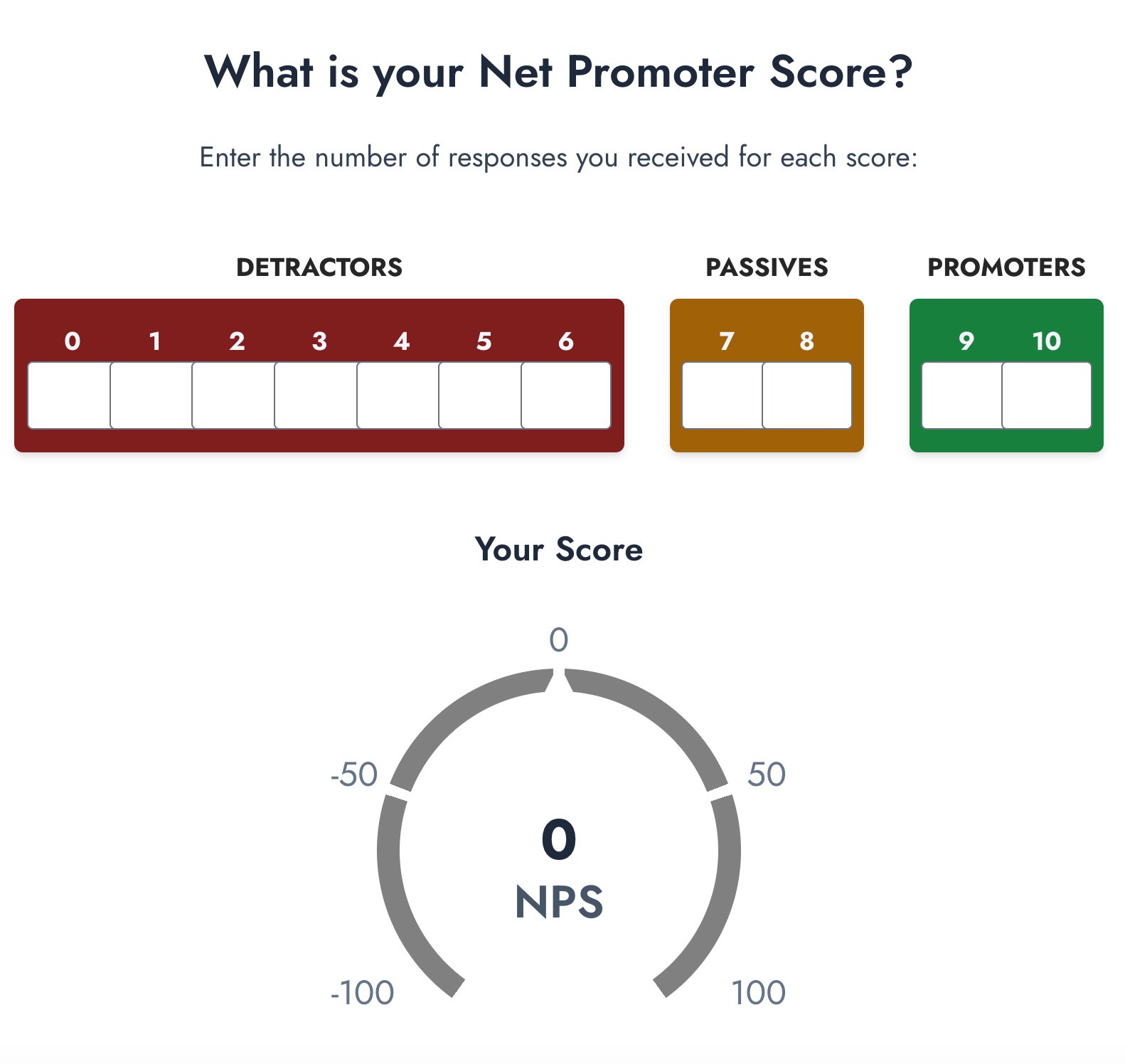
Free calculators help you turn survey counts into scores: calculate your NPS with our free NPS calculator after relationship surveys, and use our free CSAT calculator for transactional satisfaction snapshots.
For task-level ease averages, the CES calculator matches typical effort scales; when you need to show leadership how experience work maps to revenue, the CX ROI calculator helps frame the business case. You can pair these with survey templates to get started in minutes.
Know the Difference: Loyalty vs. Satisfaction
One of the biggest mistakes I see teams make is lumping all CX metrics together. They are not the same. Understanding the difference between relational and transactional feedback is crucial for building a balanced program.
Here’s the breakdown:
-
Relational metrics are your long-term health check. They measure the overall strength of your customer relationship.
-
Transactional metrics are your in-the-moment snapshots. They zoom in on a single interaction, like a purchase or a support ticket.
Net Promoter Score (NPS) is the king of relational metrics. The "How likely are you to recommend us?" question isn't about a single transaction; it's a gut check on overall brand sentiment. A strong NPS is a powerful signal of loyalty and a good predictor of organic growth.
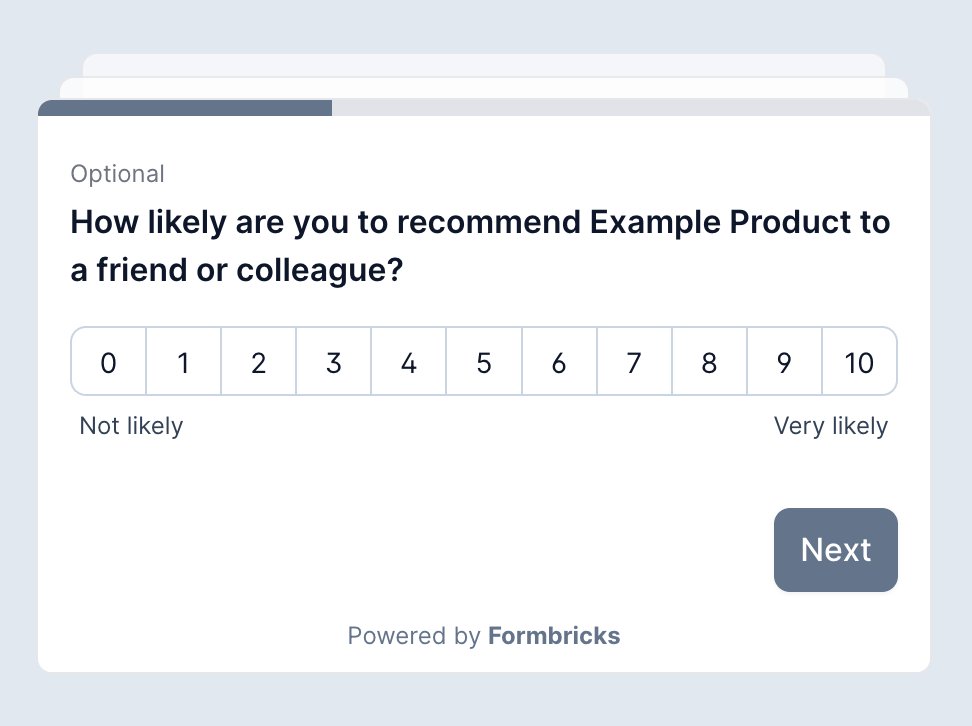
On the flip side, Customer Satisfaction Score (CSAT) is purely transactional. When you ask, "How satisfied were you with your recent support interaction?" you're getting immediate, highly specific feedback. It’s perfect for spotting and fixing friction points in real-time.
Think of it this way: NPS tells you if your customers will stick with you through thick and thin. CSAT tells you if you solved their problem today. You absolutely need both perspectives.
Don't Forget Effort and Operational Data
Beyond just satisfaction, you need to know how hard your customers are working to do business with you. That's where Customer Effort Score (CES) shines. By asking, "How easy was it to get your issue resolved?" you get a direct look at the friction in your processes.
High effort is a known killer of loyalty. Research has shown again and again that customers who have an easy time are far more likely to stick around. This makes CES an essential metric for any service-focused business.
But you can't rely on surveys alone. You need to back up perception with reality by looking at your own operational data. These are the hard numbers that prove whether your CX strategy is working.
-
First Contact Resolution (FCR): What percentage of customer issues are you solving on the very first try? A high FCR means your team is efficient and your processes are smooth.
-
Customer Churn Rate: This is the ultimate verdict. Churn tracks the percentage of customers you lose over a given period. It's the final, unfiltered truth about your overall customer experience.
Thinking about how to measure experience isn't unique to customer success; other fields have similar challenges. For example, there are great parallels between this and the strategies for measuring quality and defining metrics used in software development. Both require clear definitions and a focus on actionable outcomes. If you want to go even deeper on the survey side, check out this guide to measuring customer satisfaction.
Putting Your CX Measurement Toolkit Together
No single metric tells the whole story. The best approach is to create a toolkit that gives you a complete view of the customer journey by blending different types of metrics. A great starting point is to pick one key metric from each category.
For instance, a SaaS company might build their toolkit like this:
-
Relational: Use NPS surveys every six months to keep a pulse on overall brand loyalty.
-
Transactional: Send a CSAT survey immediately after a support ticket is closed to gauge resolution quality.
-
Effort: Trigger a CES survey after a new user finishes the onboarding flow to find out where they struggled.
-
Operational: Track Customer Churn Rate monthly as the bottom-line indicator of success or failure.
When you bring these data points together, you can start connecting the dots. Maybe you see a dip in NPS that correlates with a spike in high-effort onboarding experiences. Suddenly, you have a clear, data-backed reason to go fix your onboarding flow. The goal is to build a dashboard that doesn’t just tell you what's happening, but helps you understand why.
How to Collect Customer Feedback Effectively
Great metrics are built on great data. It's as simple as that. And when it comes to measuring customer experience, that data comes from high-quality customer feedback. This means getting way more strategic than just sending out a generic survey once a year. You need a real plan for gathering insights at the moments that truly matter across the entire customer journey. Our voice of customer templates provide structured frameworks to help you build this plan systematically.
The whole point is to capture timely, relevant, and honest feedback. To get there, you'll need to use different collection methods at critical touchpoints. Doing this gives you a complete, 360-degree picture of how customers feel at each stage of their relationship with your brand.
Deploying Surveys at Critical Journey Touchpoints
With surveys, timing is everything. Seriously. Asking for feedback at just the right moment can dramatically boost your response rates and the quality of the insights you get. Forget the one-size-fits-all approach. Instead, map out your customer journey, explore different survey distribution methods, and pinpoint the key interactions where feedback would be most valuable.
Here are a few high-impact moments to consider:
-
Post-Purchase: Right after a customer buys something is the perfect time for a quick CSAT survey. This gives you an immediate pulse check on the checkout experience and their initial excitement.
-
After a Support Interaction: The second a support ticket is closed, that’s your cue to trigger a CES survey. It tells you exactly how easy or difficult it was for them to get a resolution.
-
During Onboarding: For SaaS companies, onboarding is make-or-break. A short survey after a user hits a key setup milestone can uncover friction points that might otherwise lead to churn down the road.
-
After a Feature Launch: When you roll out a new feature, targeted in-app surveys can give you instant feedback from the people who are actually using it.
The most effective feedback loops are built on immediacy. The closer your request is to the actual experience, the more accurate and detailed the customer’s recollection will be, giving you much clearer data to work with.
Uncovering Insights from Indirect Feedback
Not all feedback comes from a formal survey. In fact, some of the most valuable insights don't. Your customers are constantly sharing their opinions across all sorts of channels, and tapping into these indirect sources is where you find the unfiltered, unsolicited truth.
Think beyond the survey form and start digging into these goldmines:
-
Support Ticket Themes: Your support inbox is overflowing with raw feedback. Use text analytics tools to spot recurring themes and keywords. Are people constantly getting tripped up by the same feature? Are shipping issues a common thread? Formbricks integrates very well with support tools allowing you to source those insights.
-
Social Media Sentiment: Keep an eye on mentions of your brand on platforms like X (formerly Twitter), LinkedIn, and Reddit. Social listening tools are great for tracking sentiment and seeing whether the chatter is generally positive, negative, or neutral. Tools like Octolens or F5Bot can help you keep track of this.
-
Online Reviews and Communities: Scour review sites like G2, Capterra, or Trustpilot, along with industry forums. This is where customers often go to share detailed, long-form feedback about their experiences.
Analyzing this unstructured data is becoming a huge deal. The global customer experience management market was valued at USD 9.35 billion in 2022 and is on a steep growth trajectory. A big driver of this is text analytics, which makes up over 41.2% of the sector's revenue as more companies use it to really understand customer sentiment. You can see more stats on the CXM market's growth from Market.us.
Choosing the Right Tools and Asking Better Questions
The tools you use can make or break your entire feedback program. Sure, simple survey software might get you started, but comprehensive CX platforms offer advanced features like trigger-based automation and integrations that pipe data right into your CRM. If you want a deep dive into different survey types, our guide on designing effective customer experience surveys is a fantastic resource.
But remember, no matter what tool you use, the quality of your questions dictates the quality of your answers. Avoid leading questions or cramming two questions into one. Keep your surveys short and focused to respect your customers' time and prevent survey fatigue. A well-crafted question should be a breeze to understand and even easier to answer, giving you the clear, actionable data you need to make real improvements.
Turning Customer Data into Actionable Insights
Collecting customer feedback is just the start. Let's be honest, raw data doesn't fix anything on its own. The real magic happens when you dive into that information, hunt for meaningful patterns, and use what you find to build a clear plan of action.
This is how you turn a simple survey score into a powerful, growth-driving strategy.
The first step? Stop looking at your data as one giant, uniform blob. Your customers aren't a monolith, and treating their feedback that way is a recipe for missed opportunities. You have to slice and dice the feedback to uncover the specific pain points hitting different groups.
Segment Your Feedback to Pinpoint Problems
By breaking down your data into smaller, more focused segments, you can shift from making vague observations to diagnosing precise problems. This is how you see exactly how the experience differs for various customer types or at different stages of their journey.
Start by digging into the attributes you already track:
-
By Customer Persona: How do your enterprise clients rate their experience compared to your startup customers? Their needs, expectations, and deal-breakers are probably worlds apart.
-
By Purchase History: Are first-time buyers getting tripped up by your checkout flow, while your loyal, repeat customers are fuming about post-purchase support?
-
By Journey Stage: Segment feedback from brand-new users in their first 30 days versus seasoned pros. This can throw a spotlight on friction points in your onboarding process.
Here's a real-world example: A SaaS company might be looking at a decent overall Net Promoter Score (NPS) of +40. Looks good, right? But when they segment by user tenure, they uncover a horror story. Customers with less than 60 days on the platform have a dismal NPS of -15.
Try Formbricks segments to get a better hold of this.
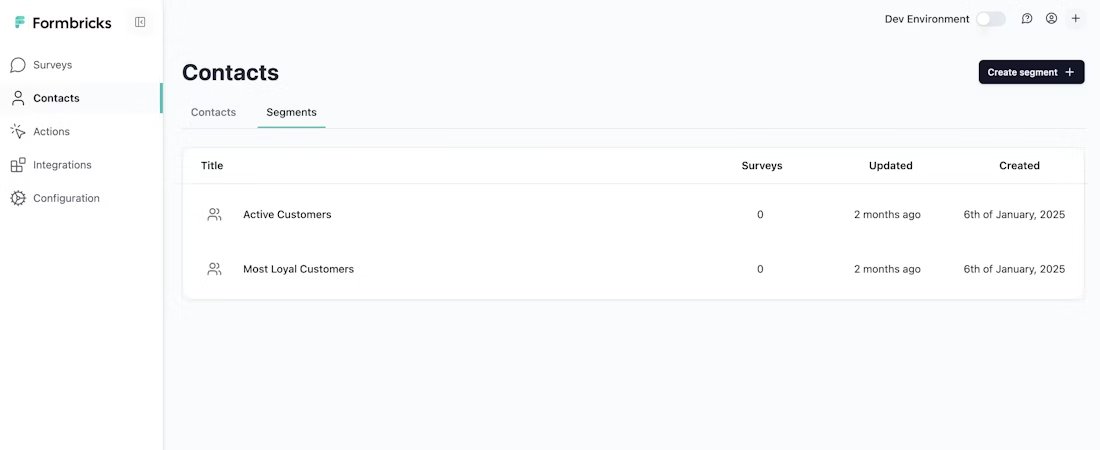
Boom. That tells them the problem isn't the core product it's a broken onboarding experience that's creating detractors from day one.
The goal of analysis is to find the story hidden within the numbers. An aggregate score tells you what is happening, but segmented data tells you who it's happening to and where it's happening in their journey.
Connect CX Metrics to Business Outcomes
To get your team and leadership on board, you have to connect your CX metrics to tangible business results. This is how you prove that improving customer experience isn't just a "nice-to-have" initiative; it's a direct driver of revenue and retention.
Start by correlating your CX data with your core business metrics think churn rate, customer lifetime value (CLV), and repeat purchase frequency.
What if you discover that customers who give you a low Customer Satisfaction (CSAT) score after a support ticket are 50% more likely to churn in the next 90 days? Now you have a rock-solid financial case for investing in better support training. It's not about feelings; it's about revenue.
This connection is critical. Research shows that more than 50% of customers will ditch a brand after just one bad experience. Every single touchpoint matters, from a live support call to a quick chat with a bot.
To really act on this data quickly, many businesses are turning to real-time analytics. Instead of waiting for a quarterly report, you can generate insights and react instantly. If you're looking to go deeper, check out this guide on mastering real-time data analytics.
Ultimately, you need a way to bring all this together visually. A well-designed dashboard doesn't just display numbers; it communicates findings clearly to stakeholders. This is what ensures your hard-won insights lead to meaningful change, not just another report that gathers dust.
Using Feedback to Drive Continuous Improvement
Gathering data is pointless if it sits in a spreadsheet. This last step is all about turning insights into action a process we call "closing the feedback loop." It’s where your CX program stops being a measurement tool and starts being an engine for growth.
Acting on feedback isn't just about fixing bugs or tweaking a feature. It's a powerful way to show customers you're actually listening. When someone takes the time to give you their thoughts, good or bad, just acknowledging it builds a ton of trust.
Create a System for Action
To make this work, you can't just react to feedback as it trickles in. You need a structured process that sends insights straight to the teams who can do something about it, whether that’s product, support, or marketing. A solid system means accountability, and it keeps valuable feedback from getting lost.
Start by setting up clear follow-up protocols.
-
For Unhappy Customers (Detractors): The priority here is immediate, personal outreach. A quick, human response can often turn a terrible experience into a surprisingly positive one. Keep in mind, research shows that more than half of consumers will jump to a competitor after just one bad interaction, so you have to move fast.
-
For Happy Customers (Promoters): Don't just send a generic "thanks." Engage them! These are your biggest fans. Invite them to a beta program, ask them to write a review, or see if they'll participate in a case study. This makes them feel valued and turns their loyalty into a real asset for your growth.
Closing the loop is the most direct way to prove that measuring customer experience matters. It shows both customers and internal teams that feedback isn't just collected it's valued and acted upon, fostering a truly customer-centric culture.
From Individual Fixes to Systemic Improvements
Putting out individual fires is important, but the real win is using feedback to improve your entire system. This means spotting trends in your data and using them to make strategic changes to your products, services, and internal workflows.
For instance, if you suddenly see a spike in high-effort scores on your Customer Effort Score (CES) surveys all pointing to your billing portal, that’s not just a handful of isolated incidents. It’s a huge red flag that the whole process is broken. That one insight should kick off a project to redesign the portal, wiping out the root cause of the problem for every future customer.
This kind of proactive work has to be a team sport. Set up regular meetings where product, engineering, and support huddle up to review CX data together. Getting everyone on the same page helps prioritize the fixes that will have the biggest impact. If you want to dive deeper into setting this up, you can learn more about closing the feedback loop.
When you systematically act on feedback, you don’t just solve today’s problems you prevent tomorrow’s. You create a cycle of continuous improvement that keeps you one step ahead of what your customers expect.
Common Questions We Hear About Measuring CX
Even with the best strategy in hand, a few questions always pop up once teams start digging into customer experience measurement. Let's tackle some of the most common ones we see.
"We're on a Tight Budget. How Can We Even Start?"
Good news: you don't need a pricey, all-in-one platform to get going. The key is to start small and focused. Grab a free or low-cost survey tool and send a simple CSAT or NPS survey after one key moment in your customer's journey.
Your main goal here is to prove value, fast. Just a handful of powerful insights like showing a direct link between a specific bad experience and customers canceling their subscriptions is often all it takes to get the green light for a bigger investment later on.
Don't try to boil the ocean. Pick one critical touchpoint, get clean data, make one small improvement, and show everyone the impact. That's how you build momentum and a rock-solid business case.
"What's the Best Way to Deal With Negative Feedback?"
First things first: negative feedback is a gift, not an insult. Think of it as a free, urgent consultation on how to save a customer relationship. You have to act fast and with real empathy, especially since more than half of customers will jump ship to a competitor after just a single bad experience.
A solid process has two parts:
-
The Immediate Fix: A real human should reach out to that specific customer. Apologize, listen to understand the full story, and offer a real solution. That personal touch can flip a detractor into a lifelong fan.
-
The Systemic Fix: Don't just solve it and forget it. Tag that feedback. When you see the same complaint popping up from multiple people, you've uncovered a deeper crack in your product or process that needs a permanent fix.
"How Do We Actually Prove the ROI to Leadership?"
This is the million-dollar question. The trick is to tie your CX metrics directly to the numbers leadership cares about: money. Stop reporting on your NPS in a vacuum. Instead, show how a 5-point increase in NPS correlates with a drop in customer churn or a bump in Customer Lifetime Value (CLV).
Build a simple dashboard that tells this story visually. For instance, you could show that your "Promoters" have a 15% higher CLV than your "Detractors." When you frame your CX work in terms of revenue generated or saved, it stops being a "nice-to-have" and becomes an obvious business driver.
Ready to turn customer feedback into your biggest growth lever? With Formbricks, you can launch targeted, privacy-first surveys in minutes, not months. Start building a better customer experience today at https://formbricks.com.
If you're evaluating CX platforms, see our guides on Medallia alternatives and Survicate alternatives.
Try Formbricks now