

AzureAD OAuth is part of the Formbricks Enterprise Edition
Microsoft Entra ID
Do you have a Microsoft Entra ID Tenant? Integrate it with your Formbricks instance to allow users to log in using their existing Microsoft credentials. This guide will walk you through the process of setting up an Application Registration for your Formbricks instance.Requirements
- A Microsoft Entra ID Tenant populated with users. Create a tenant as per Microsoft’s documentation.
- A Formbricks instance running and accessible.
-
The callback URI for your Formbricks instance:
{WEBAPP_URL}/api/auth/oauth2/callback/azuread
How to connect your Formbricks instance to Microsoft Entra
1
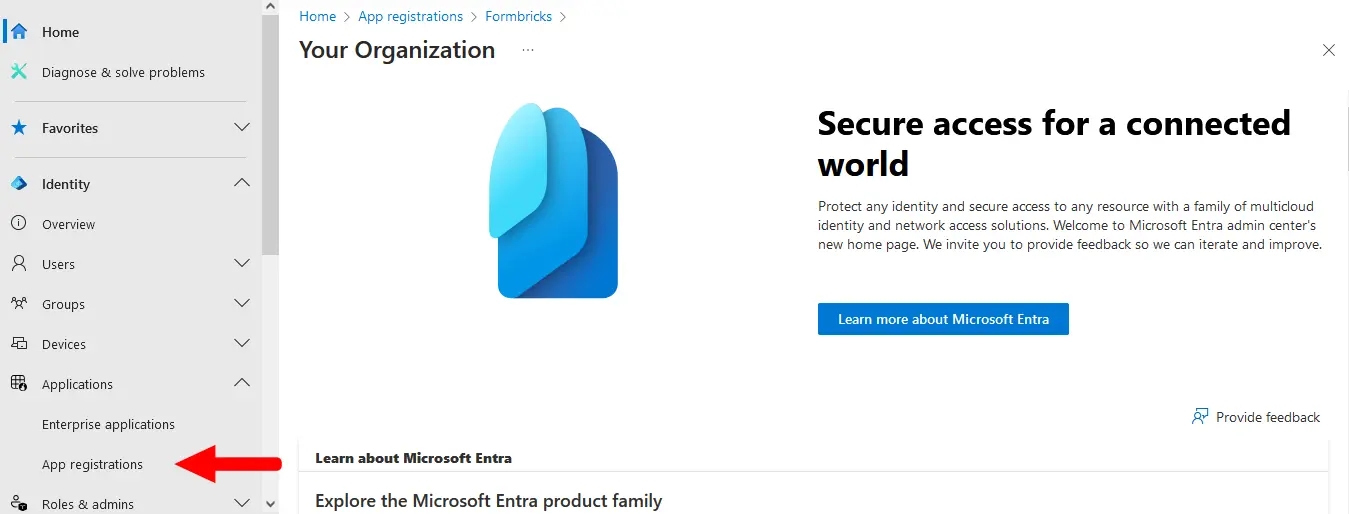
Access the Microsoft Entra admin center
- Login to the Microsoft Entra admin center.
- Go to Applications > App registrations in the left menu.
2
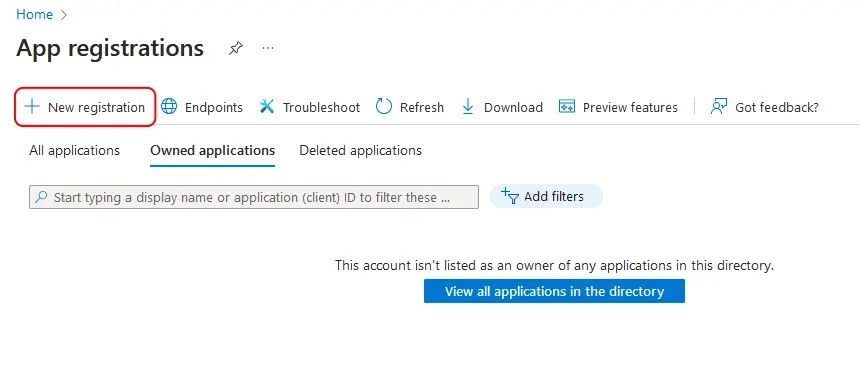
Create a new app registration
- Click the New registration button at the top.
3
Configure the application
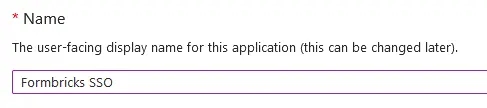
- Name your application something descriptive, such as
Formbricks SSO.
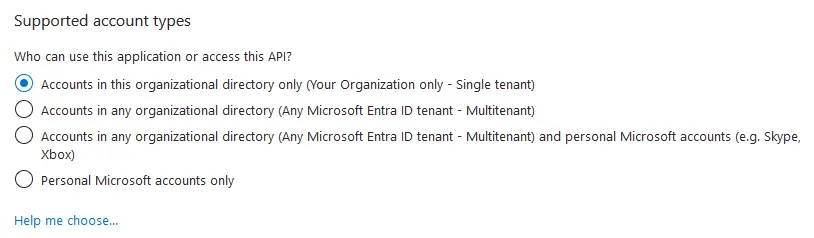
- If you have multiple tenants/organizations, choose the appropriate Supported account types option. Otherwise, leave the default option for Single Tenant.
- Under Redirect URI, select Web for the platform and paste your Formbricks callback URI (see Requirements above).

- Click Register to create the App registration. You will be redirected to your new app’s Overview page after it is created.
4
Collect application credentials
- On the Overview page, under Essentials:
- Copy the entry for Application (client) ID to populate the
AZUREAD_CLIENT_IDvariable. - Copy the entry for Directory (tenant) ID to populate the
AZUREAD_TENANT_IDvariable.
- Copy the entry for Application (client) ID to populate the
Use the Directory (tenant) ID GUID (or a verified domain) — with it set, Formbricks fully
verifies Microsoft id_tokens against your tenant’s issuer.For a multi-tenant app registration, either leave
AZUREAD_TENANT_ID unset, which is equivalent
to common and accepts both work/school and personal accounts, or set it to organizations to
accept work/school accounts only. Those two authorities advertise a placeholder issuer rather
than a real one, so Formbricks skips id_token verification for them and takes the signed-in
identity from Microsoft’s userinfo endpoint — the authority you configure still applies at
sign-in, so organizations keeps restricting which accounts Microsoft will accept. consumers
is unaffected: personal Microsoft accounts share one well-known tenant, so its id_tokens are
verified normally.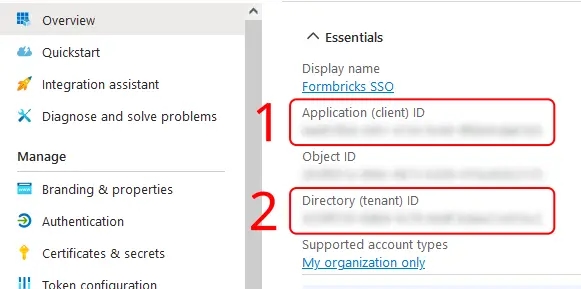
5
Create a client secret
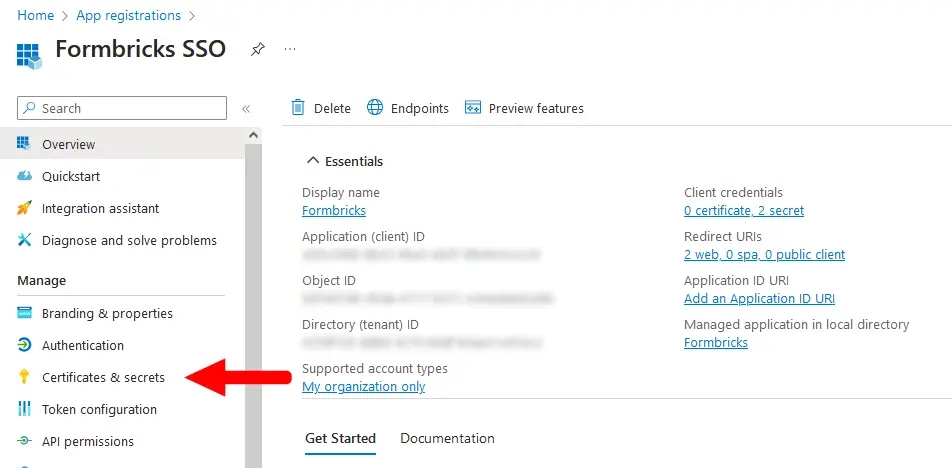
- From your App registration’s Overview page, go to Manage > Certificates & secrets.
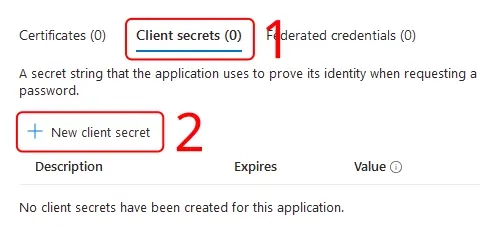
- Make sure you have the Client secrets tab active, and click New client secret.
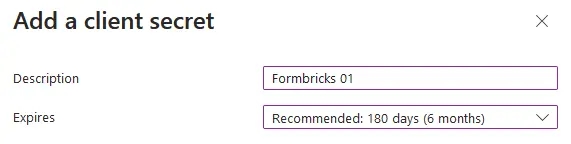
- Enter a Description, set an Expires period, then click Add.
You will need to create a new client secret using these steps whenever your chosen expiry period ends.
- Copy the entry under Value to populate the
AZUREAD_CLIENT_SECRETvariable.
Microsoft will only show this value to you immediately after creation, and you will not be able to access it again. If you lose it, simply create a new secret.

6
Update environment variables
- Update these environment variables in your
docker-compose.ymlor pass it like your other environment variables to the Formbricks container.
You must wrap the
AZUREAD_CLIENT_SECRET value in double quotes (e.g., “THis~iS4faKe.53CreTvALu3”`) to prevent issues with special characters..env for Microsoft Entra ID in Formbricks would look like this:Formbricks Env for Microsoft Entra ID SSO
7
Restart and test
- Restart your Formbricks instance.
- You’re all set! Users can now sign up & log in using their Microsoft credentials associated with your Entra ID Tenant.
Keeping display names in step with your directory
SSO name synchronization is part of the Formbricks Enterprise Edition
name claim, which is their Entra ID displayName. That
attribute is free text, so its format is whatever your directory holds — accounts synced from on-premises
Active Directory often read Surname, Givenname, while accounts created in the Entra admin center usually
read Givenname Surname. Formbricks keeps whatever order your directory uses — it never reorders a
name into First Last. It does normalize the value before storing it: characters outside the allowed
set (letters, marks, spaces, and ' , . & ( ) - plus digits) collapse to a single space, so
Doe, Jane is stored unchanged while stray markup or line separators are replaced with a single space.
Formbricks re-reads that name from Entra ID on every sign-in, so a rename in your directory — a
marriage, a legal rename, a corrected import — reaches Formbricks the next time that person logs in.
Because Entra ID is authoritative for the name, the Full name field under Account → Profile
is read-only for users who signed in through SSO, exactly as the email field already is. Change the
name in your directory instead.